Über den Herausgeber von CliNFo
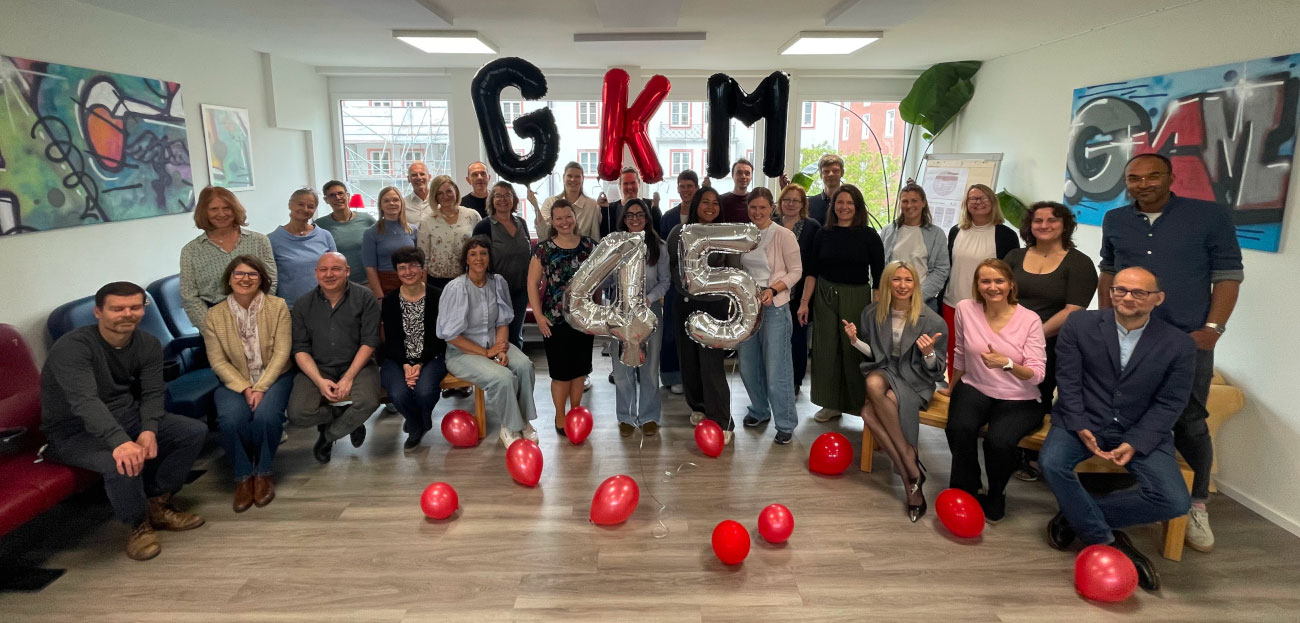
45 Jahre GKM Gesellschaft für Therapieforschung mbH
Ein Unternehmen der Forschungsdienstleistung im Spiegel der globalen und nationalen Gesundheitspolitik
Von Renate E. Hippe
1981: Gründung und erste Schritte
Am 30. April 1981 gründet Siegfried K. Hippe die GKM Marketing durch Kommunikation GmbH, mit dem Fokus auf medizinisches Marketing. Ausgestattet mit umfangreicher Expertise aus seiner Tätigkeit im Forschungslabor und als Führungskraft in großen Pharmaunternehmen möchte er ein Unternehmen schaffen, das langfristig Arbeitsplätze sichert und auf familiäre Zusammenarbeit setzt. Die Gründung erfolgt aus bescheidenen Mitteln. Das Stammkapital wird durch den Verkauf des Zweitwagens der Familie aufgebracht und die Büroräume befinden sich im Keller eines Einfamilienhauses. Das Team besteht aus dem Geschäftsführer und einer Assistenz. 2 Jahre später übernimmt Renate E. Hippe, die Ehefrau des Gründers, die Bereiche Finanzen und Personal. Die Kenntnisse aus ihrer vorherigen Position als Marketingleiterin in einem Forschungsinstitut leisten dem Unternehmen wertvolle Dienste. Zu Beginn liegt der Schwerpunkt auf der Entwicklung von Marketingstrategien für Arzneimittel.
Die Weltgesundheitsorganisation (WHO) verabschiedet die „Gobal Strategy for Health for All by the Year 2000“. In Deutschland diskutieren die Gesundheitspolitiker heftig über steigende Kosten, Effizienz und Reformen.
1986: Erweiterung des Leistungsportfolios
Die GKM verlagert ihren Fokus von medizinischem Marketing auf die klinische Forschung und wird mit dem Projekt- und Datenmanagement für klinische Studien und Post-Marketing-Studien beauftragt. Der Bedarf an medizinischer Expertise wächst, das Team wird erweitert. Renate E. Hippe wird zur zweiten Geschäftsführerin ernannt. Investitionen in elektronische Datenverarbeitung für die Erfassung von Studiendaten in Datenbanksystemen markieren den Beginn einer neuen fortschreitenden technischen Entwicklung.
1986 erschüttert die Reaktorkatastrophe in Tschernobyl die Welt, was zu verstärkten Präventionsmaßnahmen führt. Auch AIDS wird zur gesundheitspolitischen Herausforderung und erfordert eine intensive Forschung nach medikamentösen Lösungen.
1991: Umbenennung und Expansion
Die GKM wird zur GKM Gesellschaft für Therapieforschung mbH und entwickelt sich zu einer Full-Service-Clinical Research Organisation (CRO). Mit der Gründung der Abteilung Biostatistik durch Dr. Dieter Schremmer erweitert das Unternehmen sein Serviceangebot um biostatistische Auswertungen der Studiendaten aus den Phasen II und IV. Der Aktionsradius für Studien umfasst nun auch die wichtigsten europäischen Länder. Sämtliche Organisationseinheiten des Unternehmens arbeiten entsprechend der Richtlinien zu Good Clinical Practice (GCP).
Die 5. AMG-Novelle stellt erhöhte Anforderungen an die Arzneimittelsicherheit und führt zu einem Investitionsstau in der Branche. Die Gesundheitspolitik beschäftigt sich zu dieser Zeit mit der Umsetzung der Wiedervereinigung. Es kommt zur Übertragung des westdeutschen Gesundheitssystems auf die neuen Bundesländer.
1996: Wachstumsphase und neue Herausforderungen
Trotz der angespannten Lage im Gesundheitswesen ist die GKM erfolgreich unterwegs. Das Unternehmen plant eine Erweiterung des Servicespektrums auf die Evaluierung von Medizinprodukten. Abteilungen für Qualitätssicherung und Arzneimittelsicherheit werden etabliert.
Das Gesundheitsstrukturgesetz und die Einführung der Sozialen Pflegeversicherung prägen die nationalen Gesundheitsreformen. Die klinische Forschung erfährt eine stärkere Fokussierung auf Qualität, Wirksamkeit und Wirtschaftlichkeit medizinischer Leistungen.
2001: Digitalisierung und Umzug
Am alten Standort entstehen größte Herausforderungen aufgrund der fortschreitenden Digitalisierung. Die Räume sind für die Vernetzung und Anzahl der Arbeitsplätze nicht ausgelegt. Im Jahr 2002 erfolgt schließlich der Umzug an den heutigen Standort Lessingstraße 14, nahe der Ludwig-Maximilians-Universität. Der Grundstein für die Digitalisierung der Prozesse wird gelegt.
Die WHO konzentriert sich auf die Bekämpfung von HIV/AIDS und Malaria. Die EU-Richtlinie 2001/20/EG verankert verbindlich Good Clinical Practice (GCP) für klinische Studien in Europa.
2006: Internationalisierung und Expansion
Das Unternehmen erweitert sein Serviceangebot auf internationale klinische Studien und Medizinprodukte. Das Wachstum erfordert einen enormen Anpassungsprozess an interkulturelle Anforderungen und länderspezifische Vorschriften. Für die Überwachung und Qualitätssicherung der Studien werden weltweit regional operierende Partner gesucht und in das Angebotsspektrum eingebunden.
In Deutschland kommt es zur Umsetzung eines Modernisierungsgesetzes zur Verbesserung und Sicherheit von Arzneimitteln. Die WHO beschäftigt sich in der Hauptsache mit der Bekämpfung von Infektionskrankheiten.
2011: Personelle und strukturelle Anpassungen
Die GKM expandiert weiter und bezieht alle fünf Etagen des Standorts Lessingstraße. Der internationale Fokus wird stärker, das Team wächst auf 46 Mitarbeitende. Die wachsende Organisationstruktur erfordert auch eine Verstärkung des Managements. 2014 wird die langjährige Leiterin des Datenmanagements, Dr. Karin Dürrstein, zur weiteren Geschäftsführerin ernannt.
In Deutschland tritt das Arzneimittelneuordnungsgesetz (AMNOG) in Kraft. Die frühe Nutzenbewertung neuer Arzneimittel durch den Gemeinsamen Bundesausschuss (G-BA) wird verpflichtend eingeführt. Es beginnen harte Verhandlungen zwischen Krankenkassen und Pharmaindustrie für mehr Transparenz und Kostenkontrolle. Die Ära der Rabatte beginnt, Generika werden immer bedeutsamer.
2016: Neue Anforderungen und steigende Nachfrage
Die Einführung der Nutzenbewertung durch das Gesundheitsministerium führt zu neuen Herausforderungen. Das Team zur Durchführung der Analysen und Erstellung der AMNOG-Dossiers bildet sich aus den Abteilungen Biostatistik und Medizin und folgt dem vom G-BA vorgegebenen Konzept. Die Nachfrage an Serviceleistungen rund um AMNOG steigt. Durch die Verschärfung der Regularien und dem steigenden Kostendruck sehen sich Pharmaunternehmen zum Outsourcing von Forschungsdienstleistung gezwungen. Die GKM wächst weiter und tritt 2017 dem Bundesverband medizinischer Auftragsinstitute (BVMA) bei.
Die WHO kämpft mit den Nachwirkungen der Ebola-Krise. Sie bemüht sich um die Verstärkung internationaler Frühwarnsysteme und Notfallmechanismen. Ab 2015 werden die „Sustainable Goals“ zur Verstärkung globaler Umwelt-, Sozial- und Entwicklungspolitik eingeführt.
2021: Generationswechsel und internationale Krisen
Die COVID-19-Pandemie stellt die Weltwirtschaft vor enorme Herausforderungen. Auch die GKM stellt sich den neuen Maßnahmen, etwa durch umfangreiche Sicherheitsvorkehrungen und Home-Office-Regelungen. Trotz eines anfänglichen Rückgangs bleibt die Auftragslage stabil. Auch die GKM beteiligt sich an Projekten zur Bekämpfung von COVID-19. Mit dem Rückzug der Firmengründer Anfang 2018 liegt die Geschäftsführung nun in den Händen von Dr. Karin Dürrstein, Rupert Lang und Sonja Graß, Tochter des Gründerehepaars. Die GKM geht in die zweite Generation.
Die Welt im Zeichen der COVID-19-Pandemie leidet an großer Ungleichheit beim Zugang zu Impfstoffen. In Deutschland befindet sich die Gesundheitspolitik im Krisenmodus. Am 05. Mai 2023 erklärt die WHO die globale Notlage für beendet. Im Februar 2022 erschüttert ein weiteres, die Zukunft gravierend beeinflussendes Ereignis die Weltbevölkerung. Die Russische Föderation beginnt Krieg gegen die Ukraine mit bis heute unabsehbaren Auswirkungen.
2026: 45 Jahre GKM und Ausblick
Trotz der globalen Herausforderungen, darunter zahlreiche gesundheitspolitische und geopolitische Konflikte, bleibt das Unternehmen stabil und gesund und bietet rund 100 Mitarbeitenden eine sichere Zukunft. Das Gründungsziel, ein Unternehmen zu schaffen, das langfristig Arbeitsplätze sichert und auf kooperative, familiäre Zusammenarbeit setzt, ist erreicht. Die GKM bleibt auf diesem Weg und hat die besten Aussichten, auch in der Zukunft erfolgreich zu sein.